
The Income Math
How to price a conversation so the number defends itself, and why per meeting quietly rebuilds the ceiling you just left.
8 minute read. Nothing to download.
1. The ceiling, stated plainly
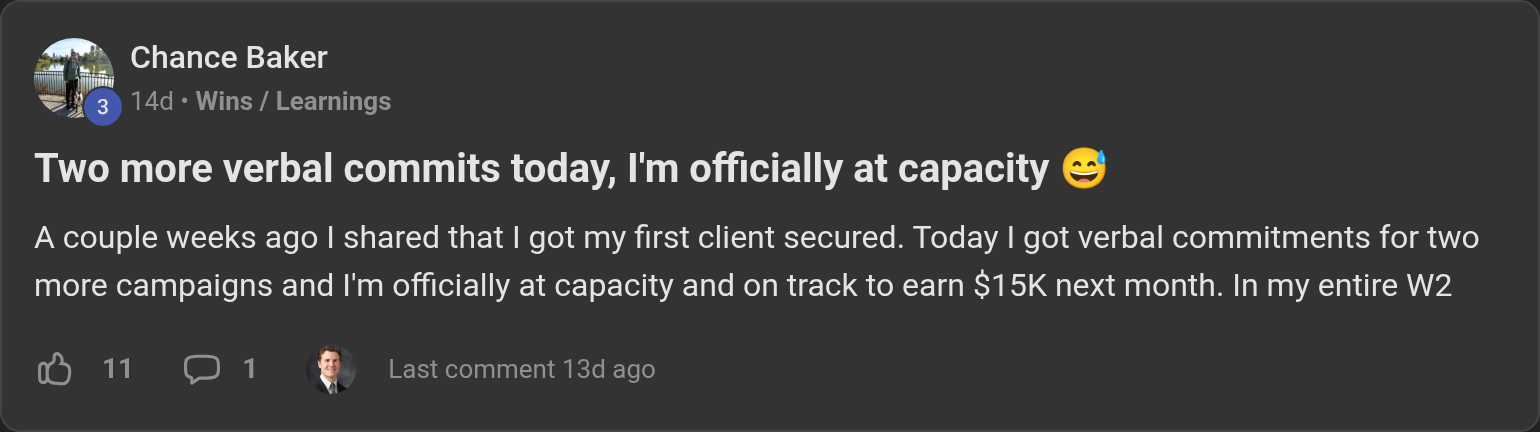
As a W2 rep you book, say, fifteen meetings a month. A few close. The company makes multiples of your salary off your work. You hit quota and they raise it next quarter. Your pay was never tied to your work, it was tied to one company's decision about your work. That is the ceiling, and it resets every quarter.
Going independent only removes that ceiling if you also change the unit you sell. Sell the same skill to more than one buyer, and price on the thing you control.
2. Price per qualified conversation, not per meeting
Cold calling is a function of marketing, so you price on the variables you control and the data you can provide. You control dials and conversations. You do not control their offer, their close rate, or whether their account executive shows up ready.
Per meeting pricing invites a dispute you cannot win, the one that starts with "that was not a qualified meeting," and it is hard to track cleanly. Commission only is worse. When someone asks why per conversation, the answer is short: you price on the variables you control, and they can run it a month and see.
| Model | Use it when | Watch out for |
|---|---|---|
| Per conversation | Almost always, and always to start. It is the cleanest. | Nothing structural. Hold your floor. |
| Per meeting | Only when booking is clearly easy, meaning a great product plus your acumen. | Minimum $750 a meeting, ideally $900 or more. Risky early because the client fights qualification and no shows. |
| Hourly or flat retainer | Small addressable market, roughly 100 accounts, where volume pricing makes no sense. | Be willing to walk. Consider a retainer plus commission instead. |
| Hybrid | A hard negotiator you want to keep. | Slightly lower per conversation plus a per meeting kicker. This often nets you more, not less. |
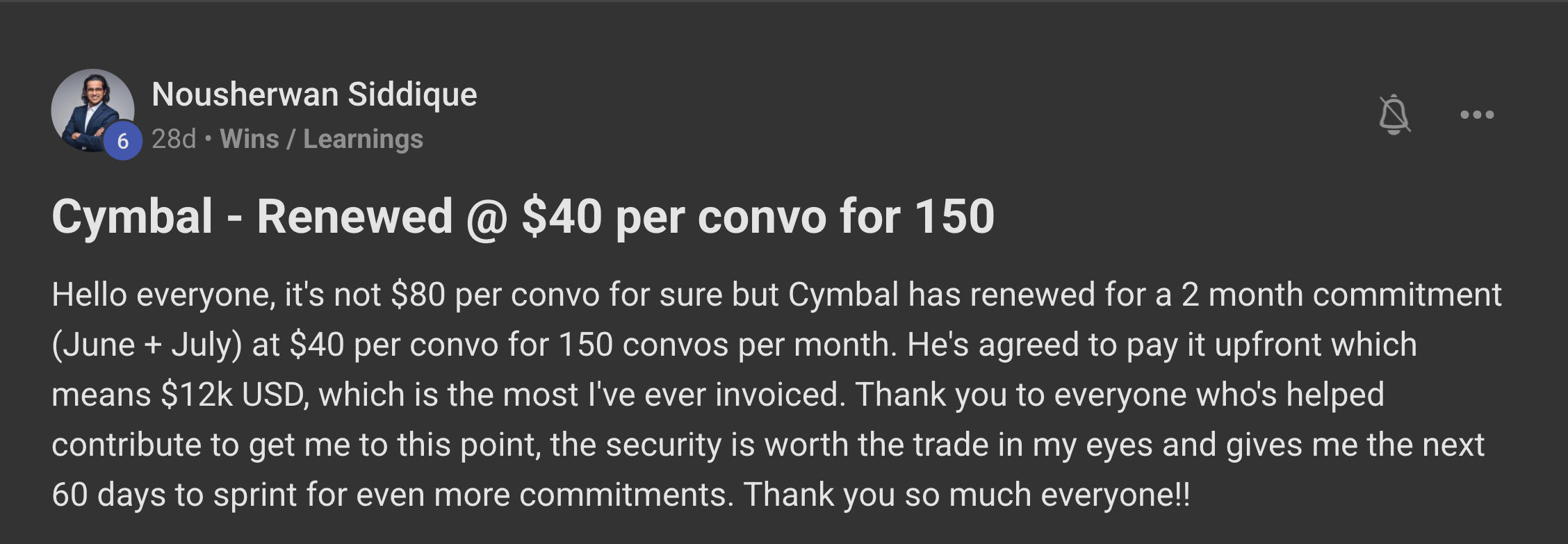
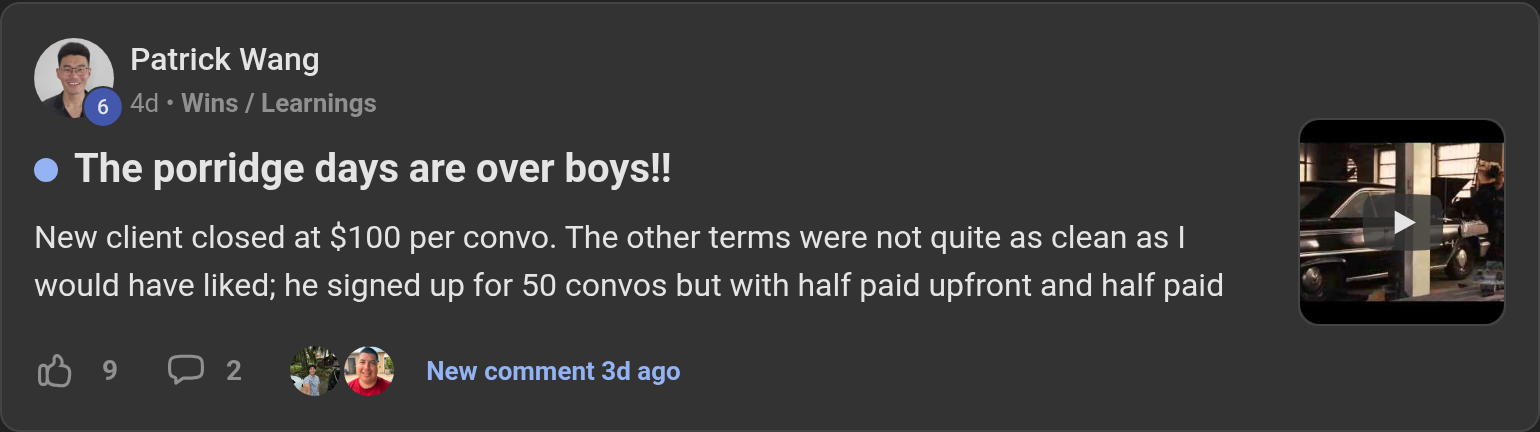
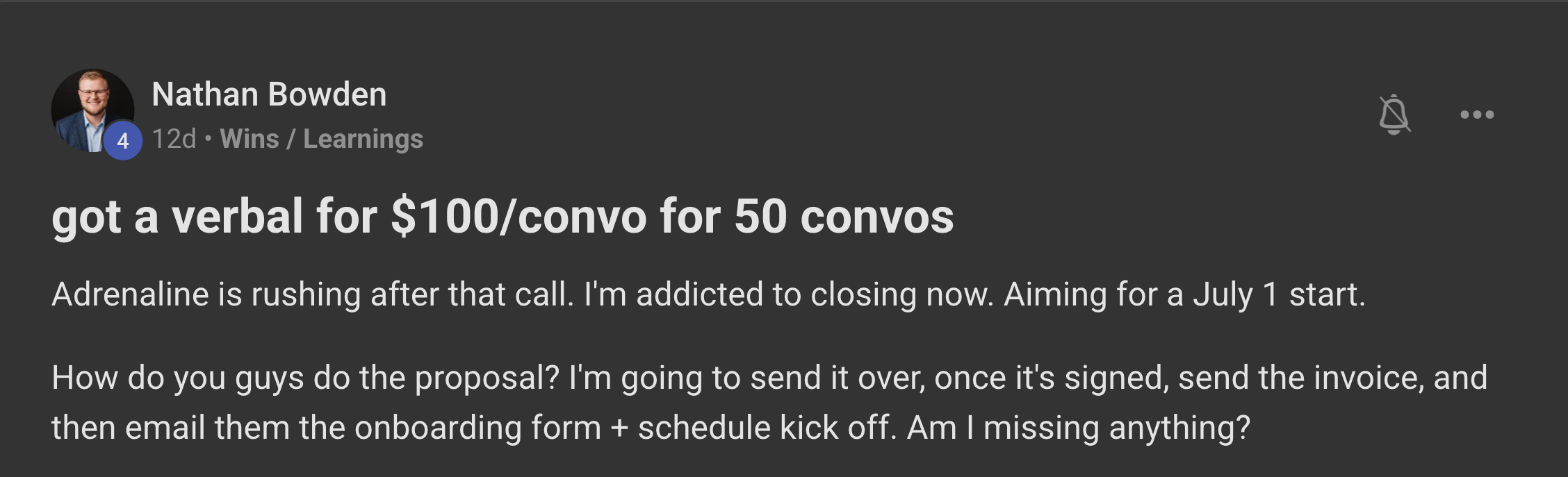
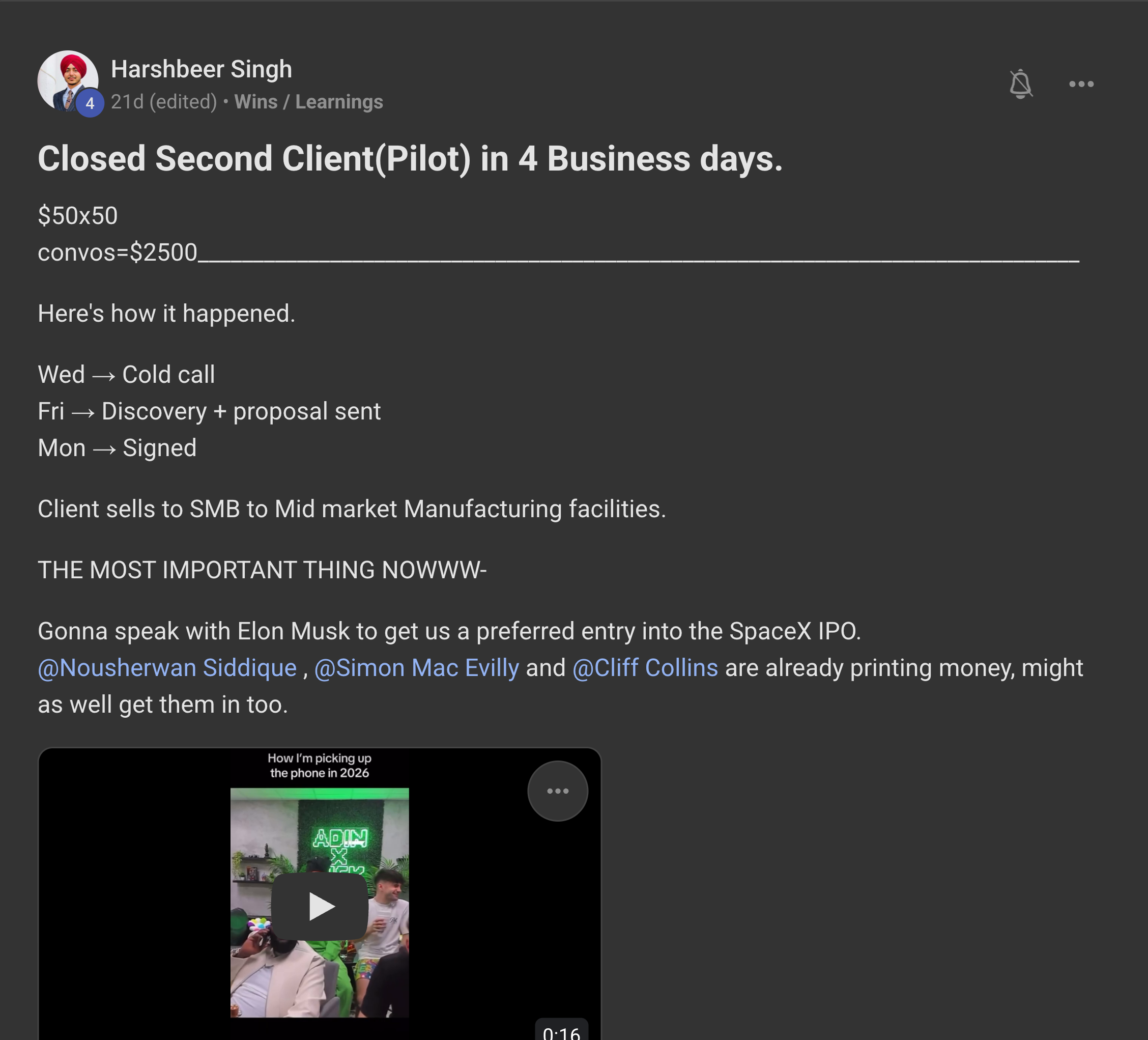
About $50 per conversation for most people, about $40 per combo. Start at $50 to $60 and add per meeting kickers later, once you understand the value you deliver. If a client pushes hard for per meeting, make sure they pay a lot per meeting.
3. The ROI sheet, which is the actual mechanism
On the demo you ask three numbers: average deal size, gross margin, and close rate. From those you compute revenue per closed deal and then their maximum affordable cost per conversation. You price to a minimum 3 to 1 return, ideally 5 to 1.
Most prospects do not know their own numbers. Walking them through it is what positions you as the expert rather than a vendor reading a rate card.
| Input | Value |
|---|---|
| Average deal size (ACV) | $25,000 |
| Gross margin | 60 percent |
| Profit per closed deal | $15,000 |
| Close rate | 25 percent |
| Their max affordable cost per conversation | up to $125 |
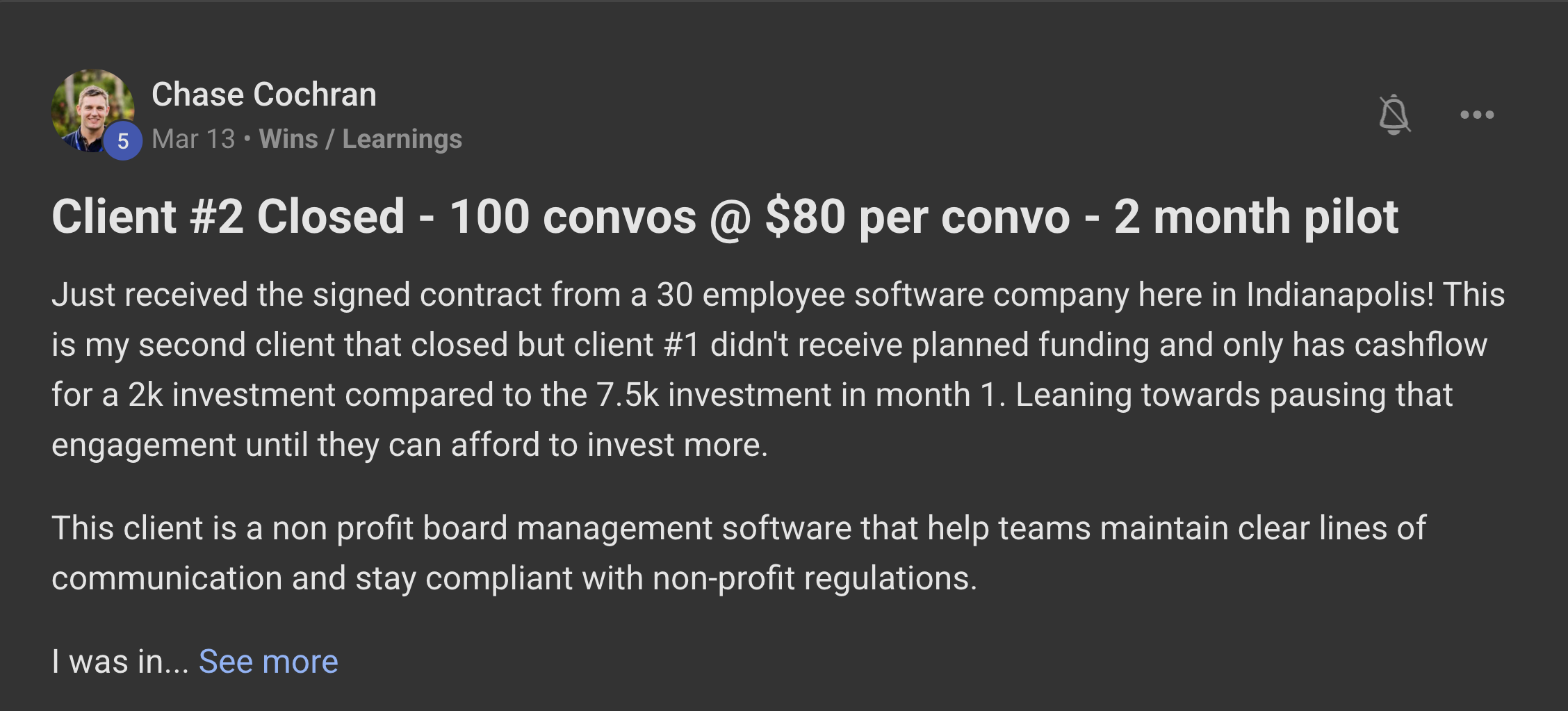
| What you actually pitch | $80 |
You showed them their own ceiling before you named your number. Against $125, a quote of $80 reads as a discount. Use the sheet to justify opening high, $70 to $100 or more, off the numbers they gave you, and know your negotiation floor before you start.
Be conservative on their inputs. If a prospect claims a 60 to 80 percent close rate, round it down to 40 or 50 so the numbers stay comfortable and credible. Gather ACV, lifetime value, margins, close rate, and meeting rate. Absorb your own data and enrichment cost into the price rather than making the client think about credits and mapping.
4. How to deliver the number
Share your screen, then go silent and let them read the sheet themselves. Do not walk it line by line, but know the whole sheet well enough to answer anything they ask about it.
One rep held a full ten second silence after quoting $75 per conversation while the prospect did the math in his head. The silence is the technique, not a mistake.
Two structural moves. Split discovery and pricing into two calls when you can, so the first call earns the numbers you need. And show the permanent pricing first, then offer a pilot tier to prove the concept. Both sides get to feel each other out, and pilot renewal is the natural moment to ask for a testimonial.
5. Qualify on ACV, because nothing else matters
Industry does not set your price. The company's average contract value does. When you are calling for yourself, ACV is the only real qualifier. Funding, revenue, and employee count filters are hit or miss, and dropping them can book you more meetings.
| Your price per conversation | Deal size it needs |
|---|---|
| $50 | about $10,000 ACV minimum |
| $100 | about $40,000 to $50,000 |
Get a number out early. Do not lose an otherwise great call at the pricing reveal at the end. You can deflect a price question to the call itself, but still qualify on ACV up front so you never book someone who cannot afford you. The sequence that works: get the yes to the meeting first, then before you lock the invite, ask their ticket size to confirm the fit.
Saying it starts at a number, and meaning it, saves you the hours you would spend on prospects who were never going to pay. Say the floor out loud.
6. The four you will actually hear
“How do you charge?”
What it really is
Asked early, usually fishing for whether you work on commission.
Say this
It is done for you cold calling, my own tech stack, I build the list and write the script, it is outcomes based, no base salary. Let's set up time to chat.
“Why per conversation and not per meeting?”
What it really is
They want to pay only for outcomes they can see.
Say this
Meetings require conversations, so conversations have value. I price on the outcome I control rather than depending on your team to close. Run it a month and see.
“We cannot afford that right now.”
What it really is
Cash flow, not price.
Say this
Do not drop the price. Offer a pilot and 50/50 payment terms instead.
“Can you guarantee qualified meetings?”
What it really is
Usually arrives as a red line on the contract.
Say this
Restate the consumption model. You cannot guarantee qualified meetings because that depends on their ICP and product market fit. Hold firm rather than bolting a guarantee onto a per conversation deal.
Do this in the next hour
- 1Write down your floor. $50 per conversation unless you have a reason.
- 2Build the ROI sheet with three inputs: deal size, margin, close rate.
- 3Run it on one company you already want as a client and find their max affordable cost.
- 4Write your one line answer to "how do you charge" and say it out loud until it is boring.
- 5Decide the ACV you will not go below, and hold it on the next call.
This is the free version. The program is where you get the lists, the scripts, and someone checking your calls.