
The Setup
Everything the business side of this actually takes, from the entity to the first signed contract, for the rep who can sell but thinks they cannot run a business.
8 minute read. Nothing to download.
1. The part you are scared of is the small part
"I can sell, I just cannot run a business." It comes up with almost every good rep. The honest answer after coaching seventy of them through it is that the business side is smaller than the fear. The part you are already good at took you years. The part you are worried about takes about a week.
Accountability. There is no boss hovering. Use a daily dial floor and someone to report it to, because that is the structure a job used to provide for free.
2. The stack, in full
| Need | Use | Note |
|---|---|---|
| Data | Apollo | Covers 90 to 95 percent of list building. |
| Dialing | Trellus | Apollo plus Trellus is the whole stack to start. |
| Signatures | Google or PandaDoc | Either is fine. |
| Invoicing | Stripe | You send an invoice, they pay it. |
| Entity | LLC with a business bank account | A form and a couple hundred dollars. |
| Credibility | A one page website | Some prospects insist on seeing one before they book, and you need it for payment setup and a company page. |
One coach tried Prospeo, ZoomInfo, ConnectAndSell, SureConnect, and Titan X. None of them justified the cost before there were clients. Apollo plus Trellus, then stop.
If you are in Canada, register through Ownr, which excludes Quebec, and make sure your business number is tied to your social so it does not create problems later.
3. Terms, contract, and getting paid
| Item | Standard |
|---|---|
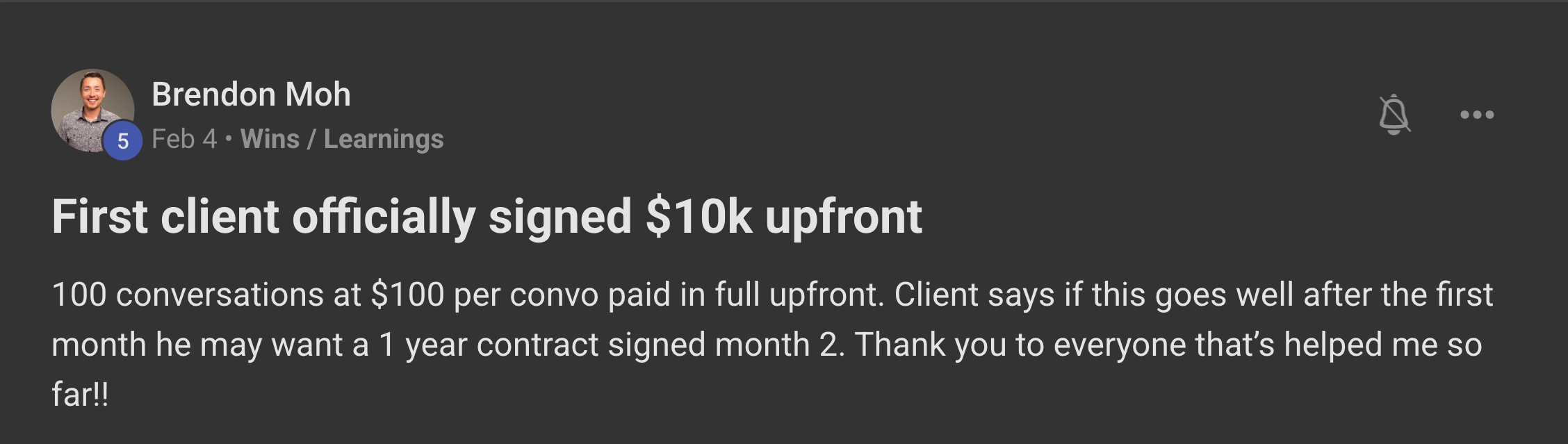
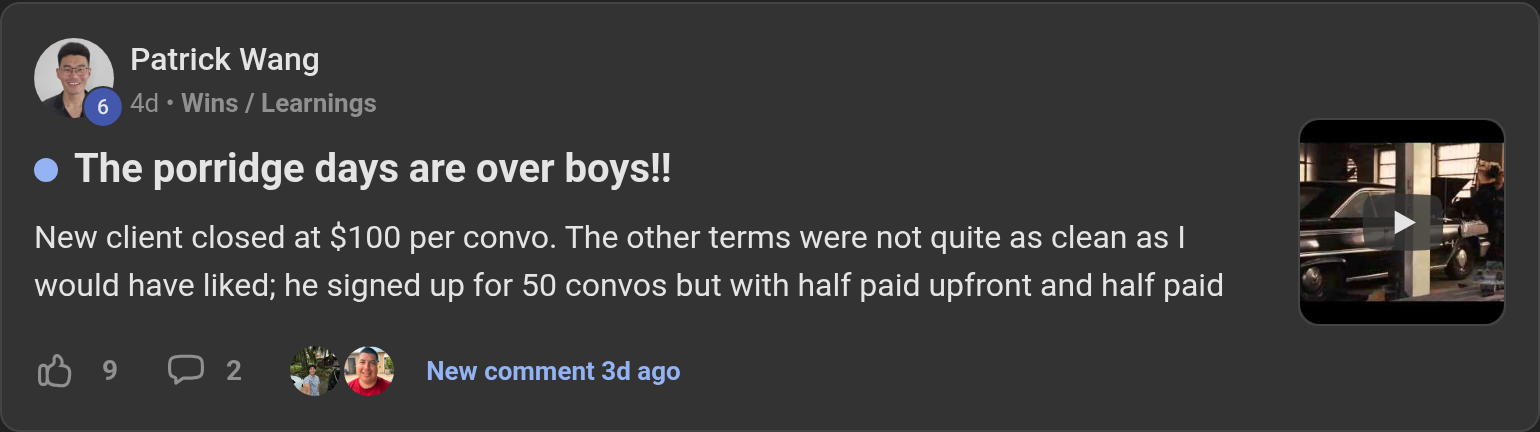
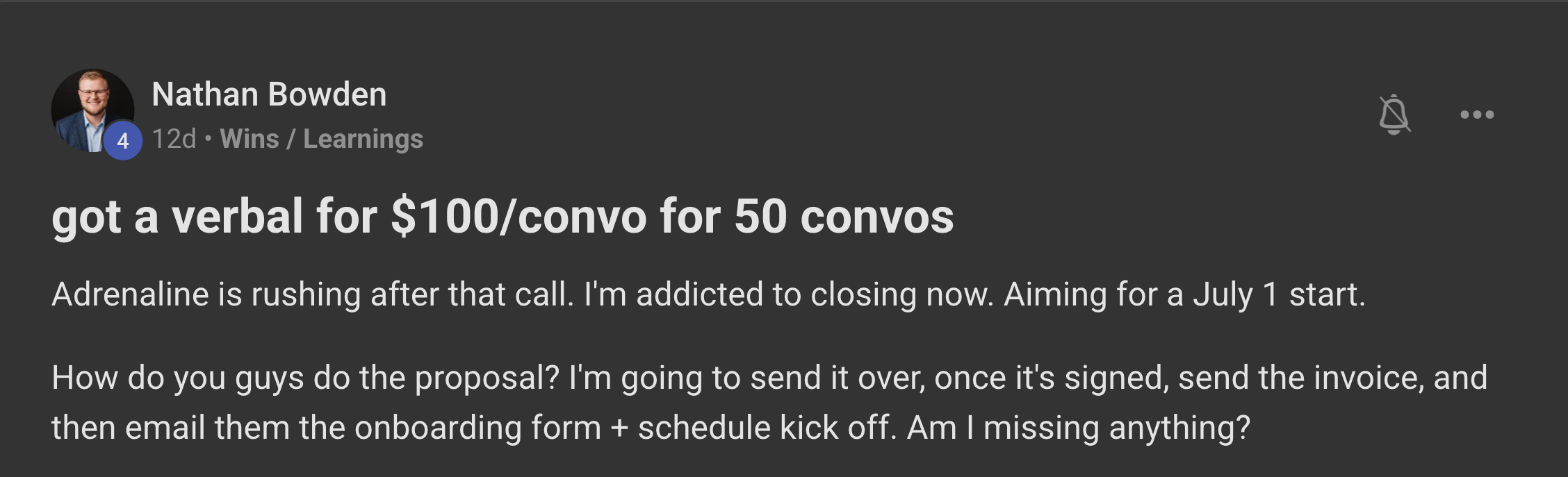
| Payment split | 50 percent upfront, 50 percent on completion. Move to fully upfront after month one. |
| Risk reversal | A full refund clause if there are zero conversations. It costs you nothing and it closes deals. |
| Order | Contract before invoice. Always. |
| Signing | PandaDoc or Google signatures. Consider booking a dedicated contract review call and getting it signed live. |
| Justifying the number | Itemize your tool stack in the contract so the price is visibly what they are buying. |
One alternative worth knowing: order based billing, where the client pre pays for a block, for example ten meetings at $500. Paying upfront buys you about thirty days of float and keeps you motivated to deliver the block.
Do not send the onboarding questionnaire before the contract is signed and paid, it is homework nobody wants before there is a deal. And treat an audition request, where a prospect wants you to cold call and pitch them for free, as a red flag and old employer framing. Agree terms by email first and make the audition the last thing before signing.
Until it is signed it is not a deal, so keep following up on stalled proposals. Delays often mean dead, but not always. Some clients come back weeks later.
4. Onboarding a client without dropping the ball
- 1
Get the questionnaire done live
Clients are slow to fill it out on their own, so book time and go through it with them.
- 2
Build the scripts and the lists
Then get an explicit green light on the ICP and the lists before you dial anything.
- 3
Set up the shared surfaces
A Slack channel and a shared drive per client. Over communicate on Slack, it is most of what clients experience as quality.
- 4
Instrument it
A daily activity tracker and bi weekly meetings. Do your capacity math off completed conversations, not hours.
Signing one client, stopping your own outbound, and then having no pipeline. Keep prospecting for yourself after you sign. Clients also eventually bring calling in house, so the pipeline is not optional.
As you fulfill, save notable call recordings as samples to send future prospects. And remember your W2 and full time SDR roles count as relevant experience you are allowed to cite.
5. Doing this while you still have a job
Time block it. Pick fixed hours, do one thing at a time, and use a physical boundary like a walk to switch modes. Call West Coast leads in your evening, which is the hour a day job leaves open.
If you are an employed SDR worried about a Fortune 500 W2, you can skip LinkedIn entirely and still post about what you do. The channel is not the business.
6. Where AI actually earns its keep
Two uses are worth your time. Grade your own calls: feed a recording to ChatGPT or Claude and let it tell you what you did. And build an onboarding routine that spins up the client folder, the contract, script and ICP storage, the Slack channel, the bi weekly check ins, the onboarding email, and the caller brief in one go.
An off the shelf AI answer is the median of public data, a large share of it scraped from forums. If everyone can ask for the best signals, that answer is worth nothing. Feed it your real business context to get past the median.
Do this in the next hour
- 1File the LLC. It is a form and a couple hundred dollars.
- 2Open the business bank account and connect Stripe.
- 3Put up the one page site, even if it is one screen.
- 4Write the contract with 50/50 terms and the zero conversations refund clause.
- 5Block the hours you will dial this week and tell one person the number.
This is the free version. The program is where you get the lists, the scripts, and someone checking your calls.